
Turkey Travel Guide for UK Visitors: Entry Rules, Safety Tips, and Local Advice


With its blend of vibrant cities, rich ancient history, and stunning Mediterranean coastline, Turkey remains one of the most popular holiday destinations for British travelers.
To help you navigate your trip smoothly, this comprehensive guide covers essential entry rules, current UK government safety advice, and a detailed visual breakdown of Turkey's transit options.
Transport Options: Visual Comparison Matrix
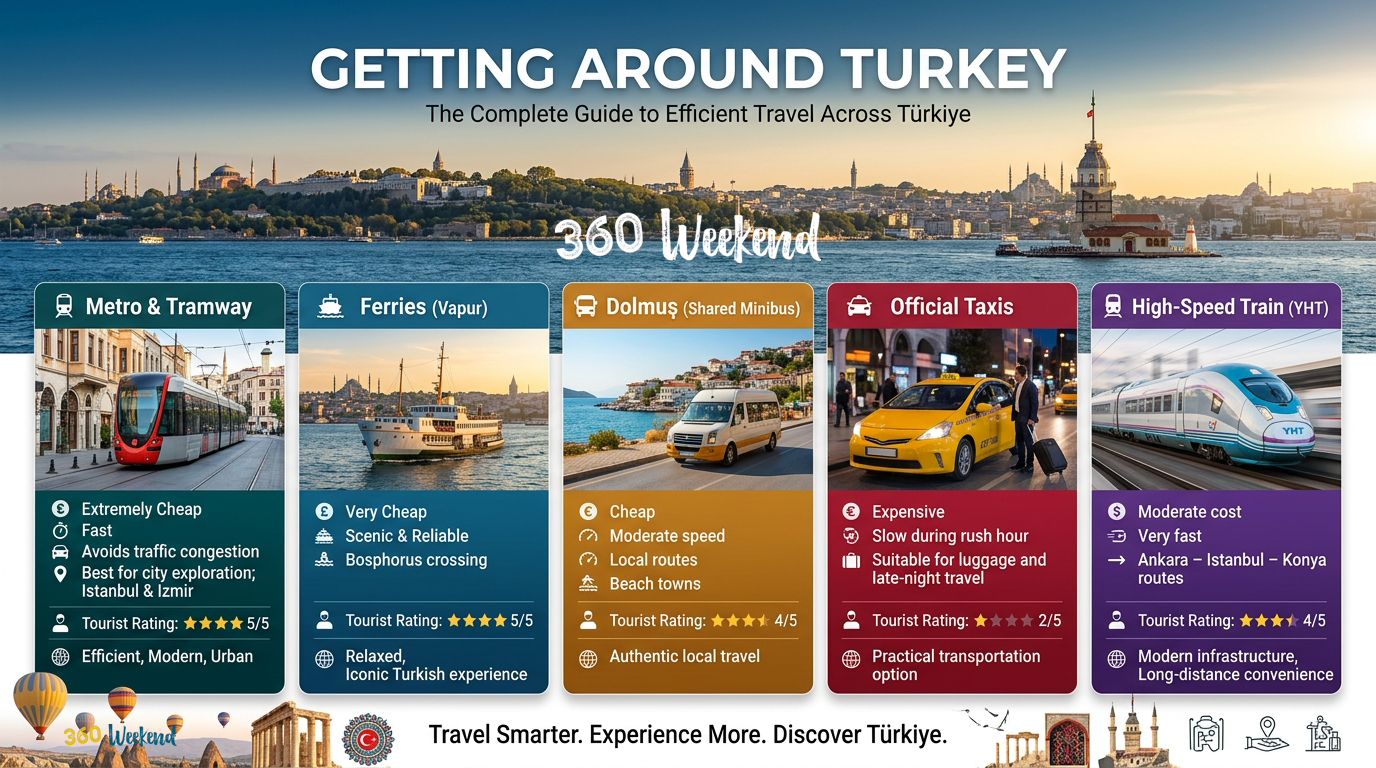
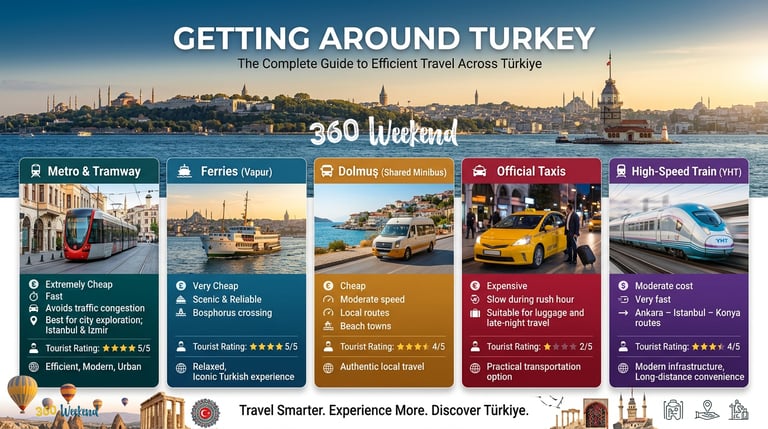
Navigating Turkey’s transport network can seem complex, but selecting the right method of travel saves both time and money. Below is a visual matrix comparing the main forms of transport across cost, speed, and overall convenience for tourists:
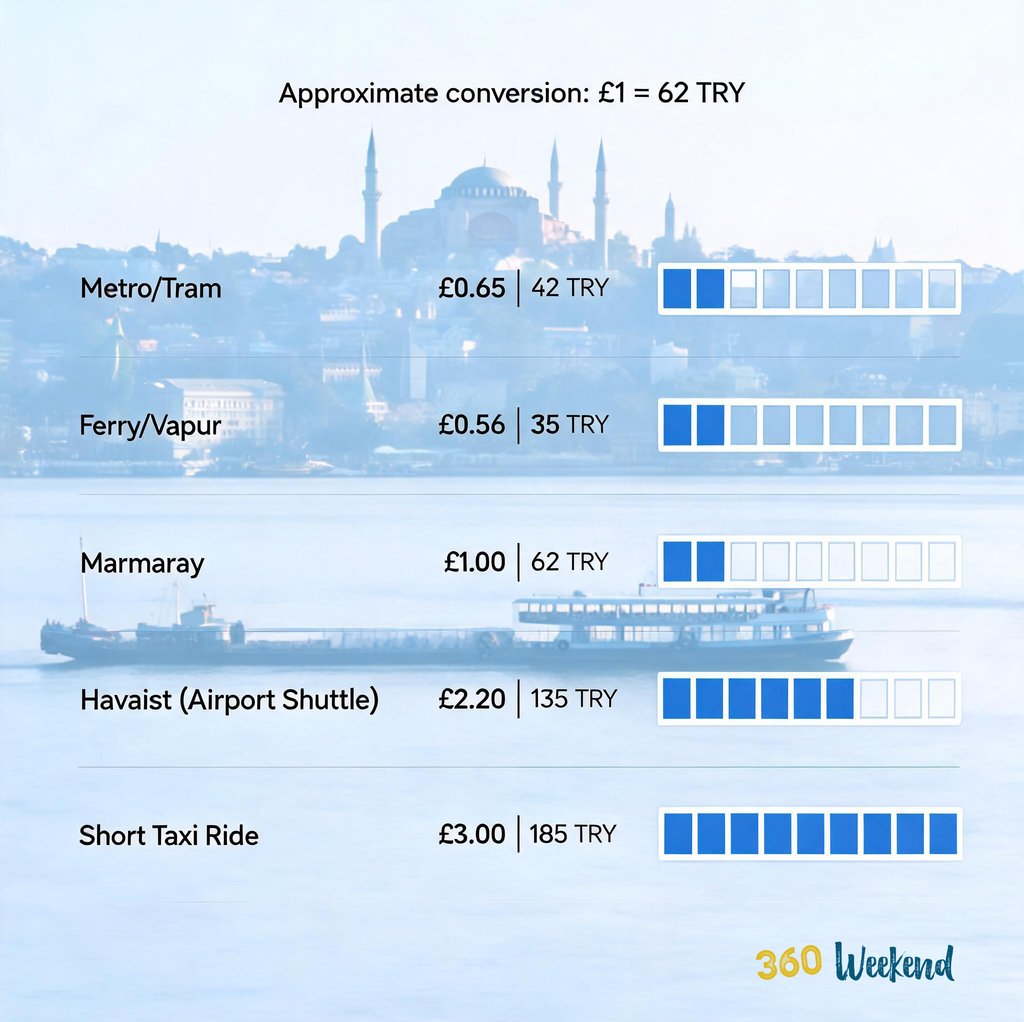
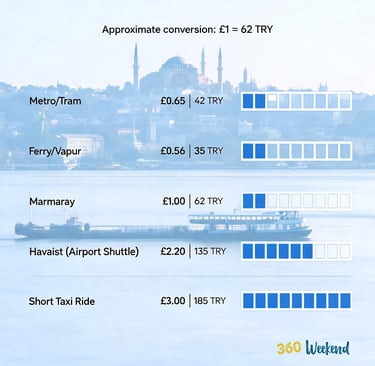
Transit Costs in Istanbul (2026/06 Fares)
Most public transport in Turkish cities uses a unified, reloadable smartcard system (like the Istanbulkart). The horizontal bar charts below illustrate the approximate cost in British Pounds (GBP) for common journeys, showing just how cost-effective municipal transit remains:
When to Avoid Road Traffic
Turkish cities, especially Istanbul, experience intense peak-hour gridlocks. Use this timeline to coordinate your taxi and public transport options throughout the day:
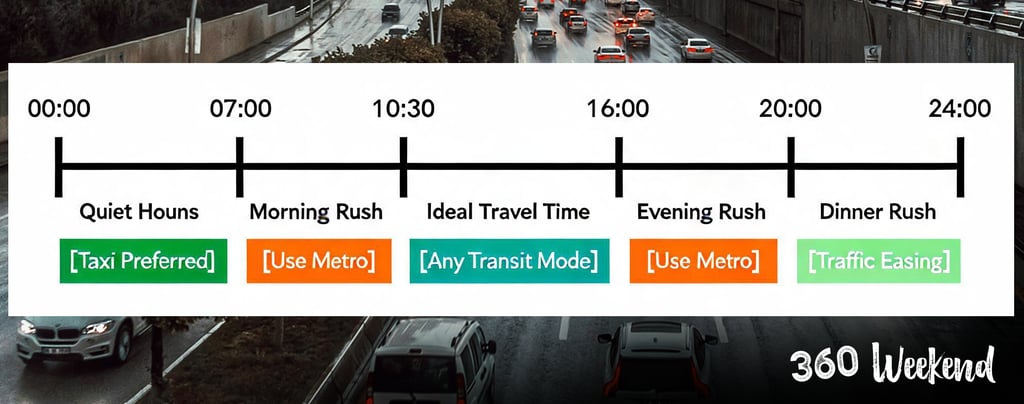
07:00 – 10:30 (Morning Rush): Avoid taxis and buses on main highways; use the underground metro or tram networks to bypass gridlock.
16:00 – 20:00 (Evening Rush): Heaviest traffic of the day. Ferries and light rail are much faster than road vehicles.
00:00 – 06:00 (Quiet Hours): Public transit runs on limited schedules; licensed taxis or ride-hailing apps (like BiTaksi or Uber) are the safest and fastest options
Entry Rules for UK Passport Holders
Visa-Free Access: British Citizens do not need a visa for holiday or business stays of up to 90 days within a rolling 180-day period.
Passport Validity: Your passport must be valid for at least 150 days (5 months) from your date of arrival and must have at least one blank page for entry and exit stamps.
Border Checks: Make sure border control stamps your passport upon arrival. A missing stamp can cause delays when leaving the country.
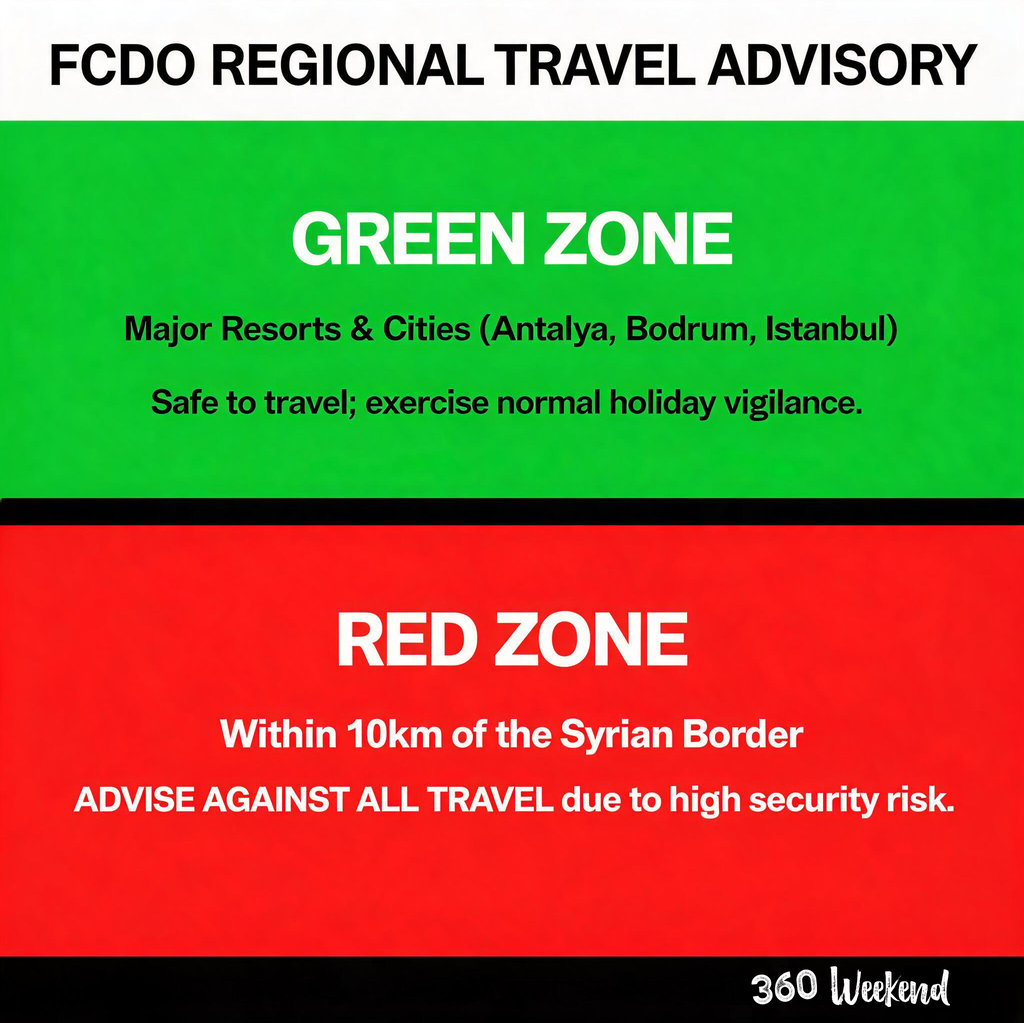
FCDO Security & Health Guidance
Adventure Activities: If you plan on paragliding in Fethiye, quad biking in Cappadocia, or booking jeep safaris, choose highly rated, licensed companies. FCDO notes that a number of tourists experience accidents on these excursions every year. Ensure your travel insurance explicitly covers extreme sports.
Medical and Cosmetic Tourism: Turkey is a leading global destination for affordable medical, dental, and cosmetic treatments. However, if you plan to travel for treatment, always consult a UK-based GP or dentist first. The FCDO strongly advises researching providers through the Turkish Ministry of Health’s official HealthTurkiye portal.
Local Advice and Etiquette
Cash is Still King in Markets: While major hotels and restaurants readily accept UK debit/credit cards, smaller street vendors, public toilet attendants, and Dolmuş drivers only accept Turkish Lira cash.
Mosque Attire: When visiting operating mosques (like the Hagia Sophia or Blue Mosque), dress respectfully. Both men and women must cover their knees and shoulders. Women are required to cover their hair; keeping a light pashmina or scarf in your daypack is highly recommended.
Taxis and Transit Cards: Always buy an Istanbulkart (or the regional equivalent in Izmir or Antalya) at airport transit terminals. For taxi journeys, ensure the driver turns on the dashboard taximeter (taksimetre) before departing.